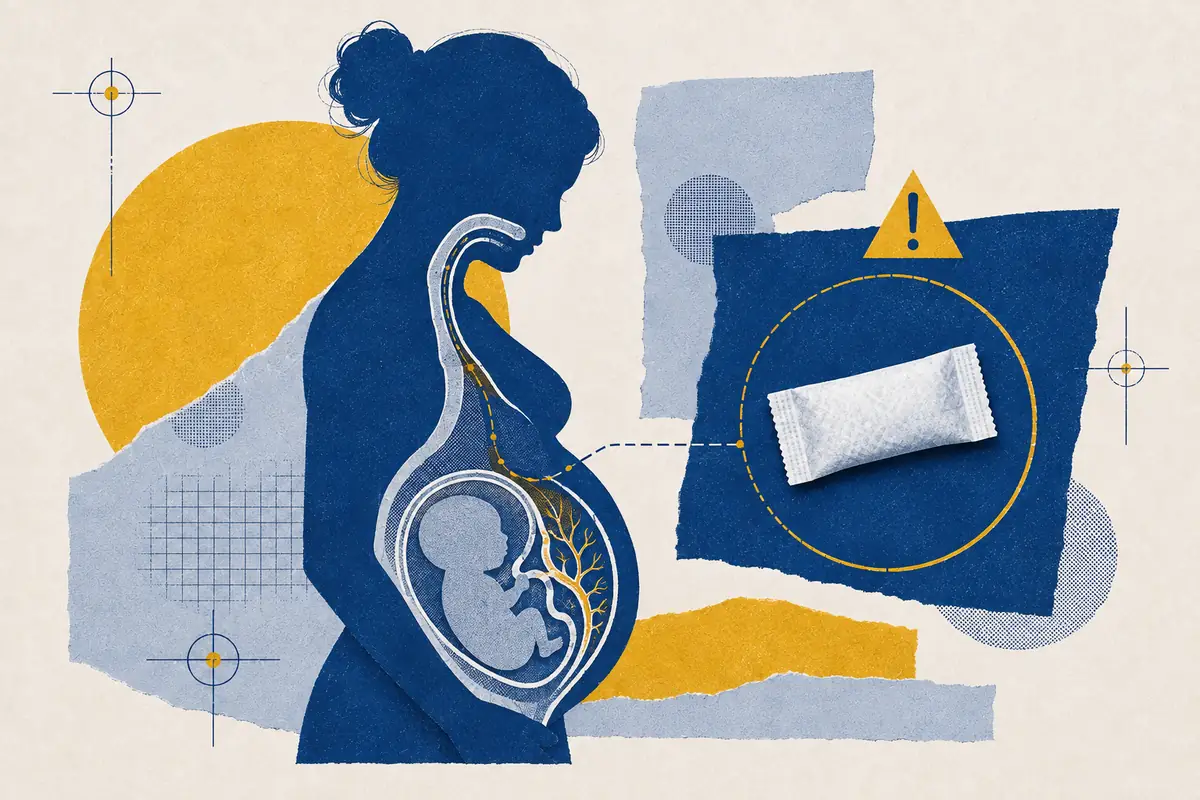
Nicotine pouches should not be used during pregnancy. There is too little direct human evidence to quantify pouch-specific pregnancy outcomes, but the absence of smoke does not remove nicotine exposure: nicotine crosses the placenta and can affect fetal development. A pregnant person who uses nicotine or smokes should seek individualized cessation support rather than substituting a consumer pouch without clinical guidance.
Document typeEvidence Review
Length1,649 words
Key Findings
- There is no adequate pouch-specific pregnancy evidence base from which to calculate a safe dose or outcome risk.
- Nicotine crosses the placenta; tobacco-free and smoke-free do not mean pregnancy-safe.
- Evidence about smoking and snus is relevant but cannot be transferred numerically to modern pouches because exposures differ.
- Pregnancy cessation decisions should be individualized with an obstetric or other qualified healthcare professional.
Why is the recommendation clear when direct evidence is limited?
Ethically, pregnant people cannot be randomized to long-term pouch exposure to test harm. Modern pouches also have a short market history, and pregnancy surveillance rarely identifies exact product, strength and duration. Direct risk estimates are therefore missing for reasons that should not be confused with evidence of safety.
The biologically active exposure is not missing. Nicotine is absorbed through the mouth and can cross the placenta. The CDC identifies nicotine as toxic to developing fetuses and advises pregnant women not to use nicotine pouches. That supports avoiding the product even though the precise pouch-specific magnitude of harm is unknown.
How are pouches different from smoking during pregnancy?
Cigarettes expose the pregnant person and fetus to nicotine plus carbon monoxide and many combustion products. Pouches avoid smoke and would not reproduce that full exposure mixture. It is therefore inappropriate to assign the well-established risk estimates for smoking directly to pouch use.
The comparative distinction does not make pouches safe. It means that “probably less harmful than continued smoking” and “appropriate during pregnancy” are different propositions. A consumer product with unknown dosing patterns should not be promoted as a pregnancy cessation treatment when clinical support and evaluated options are available.
What is directly known about pouch use in pregnancy?
Very little. The clinical pouch literature focuses on adult pharmacokinetics, short-term effects, product chemistry and patterns of use. Pregnancy studies rarely identify modern nicotine pouches as a distinct exposure, and there are no robust prospective cohorts large enough to estimate miscarriage, fetal growth, preterm birth or developmental outcomes by product and dose.
This gap prevents a numerical pouch-specific risk statement. It does not establish a safe dose, and it would be unethical to create the missing evidence by assigning pregnant participants to nicotine exposure. Research must instead use careful observational surveillance, exposure records and comparison with people who stop nicotine.
The relevant facts are therefore layered: direct product-outcome evidence is weak; evidence that pouches deliver nicotine is strong; evidence that nicotine crosses the placenta and can affect development supports precaution. The conclusion should reflect all three layers rather than presenting only the missing first one.
What happens when nicotine crosses the placenta?
Nicotine absorbed into maternal circulation can reach the fetus through the placenta. Development involves tightly timed signalling, and nicotine can interact with nicotinic acetylcholine receptors involved in the nervous system and other tissues. Public-health authorities consequently identify fetal brain and lung development as areas of concern.
The exact fetal exposure from a pouch depends on maternal absorption, which varies by content, formulation, use and metabolism. A printed milligram value is not a fetal dose. Nor can a lower-content product be declared safe simply because it delivers less nicotine than another product.
Pregnancy also changes physiology and medication decisions. General adult pharmacokinetic studies cannot reproduce placental transfer, fetal metabolism or developmental timing. Product claims based on healthy non-pregnant users should not be extended to pregnancy.
What can smoking evidence establish?
Smoking during pregnancy is associated with serious maternal, fetal and infant outcomes, including impaired fetal growth, preterm complications and perinatal harm. Smoking cessation at any point is beneficial, with greater benefit when it occurs earlier. Those conclusions rest on extensive evidence about cigarette exposure.
A cigarette combines nicotine with carbon monoxide, particulates and many other combustion products. Pouches remove the smoke pathway, so smoking risk estimates cannot be copied onto them. Doing so would obscure the likely benefit of eliminating combustion for someone who would otherwise continue smoking.
The opposite extrapolation is equally invalid. Because some smoking harm comes from combustion, it does not follow that nicotine alone is harmless to pregnancy. Comparative harm, absolute safety and suitability as a cessation tool are separate questions.
What can evidence from snus and other non-combustible products add?
Observational studies of snus provide indirect evidence about oral nicotine exposure without combustion. Reviews have examined birth weight, preterm delivery, stillbirth and neonatal effects, but exposure classification, residual smoking and differences between products complicate interpretation. Snus contains tobacco; modern pouches do not.
ACOG notes altered fetal autonomic regulation and neonatal nicotine withdrawal in studies of maternal snus use and advises discussing risks of non-combustible products. These signals support concern about nicotine exposure, but they cannot supply an exact risk ratio for a tobacco-free pouch with a different formulation.
E-cigarette and medicinal-nicotine research adds other indirect evidence, each with its own exposure profile and selection effects. Triangulation can justify avoidance while leaving product-specific magnitude unresolved. It should not be used to manufacture false precision.
How should cessation support be handled during pregnancy?
A clinician should ask about all tobacco and nicotine products, including pouches, and revisit use throughout pregnancy. Counseling, pregnancy-specific materials and behavioral support are standard starting points. The person’s dependence, current smoking, previous attempts and circumstances affect the appropriate plan.
ACOG recommends individualized care when behavioral approaches are insufficient, including discussion of pharmacotherapy where appropriate. Medicinal nicotine has dosing, warnings and clinical evidence that differ from consumer pouches. A consumer product should not be substituted silently for a treatment plan because both contain nicotine.
The comparison is especially important for someone who continues to smoke. Abruptly telling a dependent person that all exposures are identical can undermine cessation, while recommending pouches as safe can create avoidable fetal nicotine exposure. Clinical decision-making must compare realistic options for the individual rather than slogans.
What about breastfeeding and the postpartum period?
Nicotine can pass into breast milk. Product timing, dose, frequency and infant age may affect exposure, and postpartum relapse to smoking is a significant concern. The safe response is not to assume that a smoke-free consumer pouch is compatible without individualized advice.
Guidance for medicinal nicotine during lactation may differ from guidance for pregnancy and from advice about consumer pouches. The formulation, therapeutic purpose and balance against smoking matter. A clinician or pharmacist with current local guidance should handle that decision.
Pouches also create an accidental-ingestion hazard after birth. Containers and used portions must be kept away from infants, children and animals. Child-resistant storage and prompt poison-control advice are practical protections independent of the longer-term evidence debate.
What evidence would improve the answer?
Pregnancy registries and prospective cohorts should record exact product, milligrams per pouch, daily use, timing by trimester, prior smoking, concurrent products and cessation support. Outcomes should include maternal complications, fetal growth, gestational age, neonatal signs and longer-term development, with appropriate privacy and ethical safeguards.
Analyses need credible comparison groups. People who use pouches during pregnancy may differ from those who stop nicotine or continue smoking in dependence, health, income and care access. Statistical adjustment cannot repair exposure records that simply say “other tobacco.”
Manufacturers and retailers can support surveillance by maintaining stable product identifiers and formulation records, but outcome research requires independent governance and transparent conflicts. Until such evidence accumulates, the advice remains precautionary and clinically directed: avoid pouch use during pregnancy and seek support for nicotine dependence.
Frequently Asked Questions
1. Are tobacco-free nicotine pouches safe during pregnancy?
No. Tobacco-free means no tobacco leaf; it does not remove nicotine. Public-health authorities advise pregnant people not to use nicotine pouches.
2. Is there a safe pouch strength during pregnancy?
No safe pouch dose has been established. Product content also does not equal the amount absorbed or transferred to the fetus.
3. Should a pregnant smoker switch to pouches?
That decision should not be made from a retail or general-information page. A qualified pregnancy-care professional can weigh continued smoking, behavioral support and appropriate cessation treatments.
4. What if someone used pouches before realizing they were pregnant?
Stop further unsupervised use and discuss the exposure with a prenatal-care professional. An online article cannot estimate individual risk from timing, product and amount.
5. Does “no tobacco” mean there is no fetal exposure?
No. The pouch can still deliver nicotine into maternal blood, and nicotine can cross the placenta.
6. Would using fewer or weaker pouches be safe?
No safe threshold has been established. Reducing exposure is not the same as demonstrating safety, and a clinician should help plan cessation.
7. Are nicotine medicines safe in pregnancy?
Their use requires an individualized benefit-risk discussion, often after behavioral support is considered. They should not be treated as interchangeable with consumer pouches.
8. Can a pouch-specific birth-defect risk be calculated?
Not from current evidence. Product-specific pregnancy exposure data are too sparse, and smoking estimates include combustion exposures not present in pouches.
9. Does stopping nicotine late in pregnancy still matter?
Stopping smoking and nicotine exposure should be discussed at any stage; benefits and the safest method depend on individual circumstances and clinical guidance.
Primary and authoritative sources
Source trail
- [1]US Centers for Disease Control and PreventionNicotine pouches: product, use and health effects
- [2]American College of Obstetricians and GynecologistsTobacco and nicotine cessation during pregnancy
- [3]US Food and Drug AdministrationNicotine, pregnancy and fetal exposure
- [4]
- [5]UK Committee on ToxicityStatement on the toxicological risks of oral nicotine pouches
- [6]International Journal of Environmental Research and Public HealthNicotine replacement therapy during pregnancy and child health outcomes