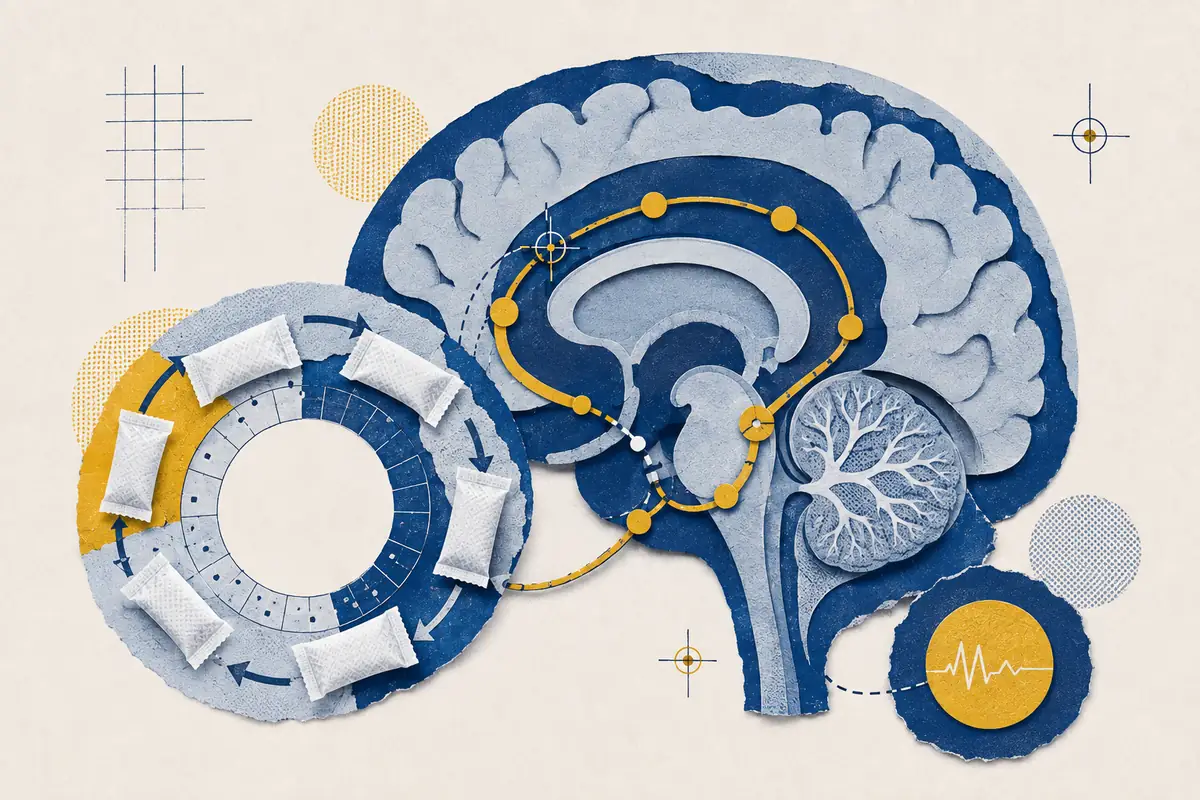
Dependence develops when repeated nicotine exposure changes behaviour and adaptation so that use becomes difficult to control. Tolerance means a given exposure produces less of some effects over time. Withdrawal is the cluster of cravings, irritability, restlessness, concentration or sleep difficulty and appetite changes that can follow reduction or stopping. Nicotine pouches can sustain all three because they deliver active nicotine.
Document typeExplainer
Length1,556 words
Key Findings
- Dependence includes more than frequency: craving, impaired control, continued use and withdrawal are important signs.
- Tolerance does not make nicotine harmless; adaptation differs across subjective and cardiovascular effects.
- Using nicotine can appear to improve mood or concentration when it is temporarily relieving withdrawal created by previous use.
- Pouch strength, delivery, convenience, cues and frequency all influence dependence potential.
What is nicotine dependence?
Nicotine activates reward and learning pathways. Repeated use links the drug effect with situations, flavours, routines and relief from withdrawal. Dependence becomes visible when a person craves nicotine, struggles to cut down, uses despite unwanted consequences or organizes activities around maintaining exposure.
Not every user develops the same severity. Speed of delivery, total exposure, age of initiation, frequency, individual vulnerability and environmental cues all matter. A discreet product that can be used throughout the day may support a different dependence pattern from a cigarette without being non-addictive.
How are tolerance and withdrawal different?
Tolerance is reduced response to the same exposure after adaptation; it can prompt more frequent use or stronger products. Withdrawal appears when a dependent person reduces or stops nicotine. Common symptoms include craving, irritability, anxiety, restlessness, difficulty concentrating or sleeping, increased appetite and low mood.
The processes overlap but are not identical. A person can tolerate the “buzz” while still experiencing cardiovascular effects, and withdrawal severity varies. Resuming nicotine can rapidly relieve symptoms, reinforcing the cycle.
How does repeated nicotine use teach the brain?
Nicotine binds to nicotinic acetylcholine receptors and influences neurotransmitter systems involved in reward, attention and arousal. Repetition pairs those effects with the context of use: after meals, during work, with a flavour, in social settings or when stress appears. Those cues can later trigger craving before nicotine levels fall substantially.
Learning is not limited to pleasure. Relief from an unpleasant state is also reinforcing. Once withdrawal develops, taking nicotine can remove irritability or difficulty concentrating caused by the previous exposure cycle. The user experiences real relief, but the product may be correcting a state that dependence helped create.
Pouches change the delivery ritual rather than the underlying drug. They usually peak more slowly than cigarettes, yet can be used discreetly across many settings. Dependence potential reflects that combination of pharmacology, availability and learned behaviour.
What signs distinguish dependence from ordinary use?
Frequency alone is incomplete. Clinically relevant signs include strong craving, unsuccessful efforts to reduce, using more or longer than intended, continuing despite health or social concerns, withdrawal, tolerance and time spent securing or using nicotine. The pattern and impairment matter more than one arbitrary pouch count.
A person may maintain work and relationships while still feeling unable to go through a meeting, journey or morning without nicotine. Conversely, regular scheduled use does not reveal severity without asking about control and consequences. Self-assessment should avoid both moral judgment and minimization.
Dependence exists on a continuum. Early recognition can make change easier, while shame can discourage disclosure and treatment. Health professionals should ask about pouches specifically because a patient may answer “no” to questions framed only around smoking.
How does tolerance develop?
With repeated nicotine exposure, some receptors and physiological responses adapt. The same product may produce less nausea, dizziness or subjective intensity than it did initially. A user may compensate by increasing strength, shortening intervals or using more units.
Tolerance is not uniform. FDA-approved nicotine-product labeling notes that acute and chronic tolerance can develop at different rates for subjective and physiological effects. Feeling less “buzz” does not prove that pulse, blood pressure or dependence effects have disappeared.
Product switching can masquerade as tolerance because two pouches with the same printed content may deliver differently. A careful assessment records exact products, daily pattern and the change over time rather than assuming every escalation has one cause.
What happens during nicotine withdrawal?
When nicotine exposure falls, an adapted nervous system has to readjust. Craving, irritability, anxiety, restlessness, impaired concentration, sleep disturbance, increased appetite and low mood are commonly reported. Symptoms vary in number and severity and can overlap with stress or an underlying condition.
Symptoms often begin within hours, are most troublesome in the early days and fade with continued abstinence, while cue-triggered urges can recur later. The timeline developed largely from smoking and other nicotine products; pouch-specific withdrawal has not been mapped with comparable depth.
Withdrawal is usually uncomfortable rather than dangerous. The major avoidable danger for a former smoker is returning to cigarettes. Severe depression, thoughts of self-harm, chest symptoms or another medical concern require appropriate professional assessment rather than attribution to withdrawal alone.
Why can nicotine seem to improve concentration or mood?
Nicotine has acute stimulant effects, and laboratory performance can change after dosing. In a dependent user, however, part of the apparent improvement may be reversal of withdrawal-related concentration difficulty or irritability. Comparing the dosed state only with withdrawal exaggerates benefit relative to a stable nicotine-free baseline.
Expectations and cues also shape subjective response. A familiar flavour or tingling sensation can signal imminent relief before peak blood levels occur. Placebo-controlled and abstinence-standardized studies help separate drug, cue and withdrawal-relief effects.
These mechanisms do not support marketing pouches as cognitive enhancers. For non-users, initiation introduces dependence risk; for users experiencing persistent mood or attention problems, clinical assessment is more appropriate than escalating nicotine.
How do pouch design and use pattern affect dependence?
Faster delivery and higher peak exposure can strengthen reinforcement, but they are not the only variables. Total exposure, repeated dosing, satisfaction, flavour, discretion and the absence of use restrictions can sustain a habit. A slower product used all day may maintain dependence even without cigarette-like peaks.
Published pharmacokinetic studies describe products ranging from modest to very high nicotine delivery. A label therefore cannot provide one category-wide addiction ranking. Product-specific delivery and the user’s actual pattern are necessary inputs.
Dual use can maintain multiple cue systems: cigarettes in one setting and pouches in another. Complete switching may reduce smoke exposure while leaving nicotine dependence intact. Smoking cessation and nicotine cessation should be reported separately.
What support exists for someone who wants to stop?
Most formal evidence and services are designed around stopping smoking, but the principles of assessing triggers, planning change, social support and managing withdrawal are relevant to nicotine dependence more broadly. A clinician or cessation service can help adapt them to pouches and identify other health needs.
FDA-approved cessation medicines have defined instructions and evidence for smoking cessation; consumer pouches do not become treatment simply because someone uses them to taper. A person who also smokes should prioritize avoiding relapse to combustible products and seek a plan suited to that risk.
Research is needed on pouch-specific cessation: gradual reduction versus abrupt stopping, product-strength transitions, withdrawal time course and relapse. Until then, individualized support is preferable to universal schedules invented from retail strength categories.
Frequently Asked Questions
1. Can nicotine pouches be addictive?
Yes. They deliver nicotine, the drug responsible for dependence across tobacco and nicotine products.
2. Does needing a stronger pouch prove tolerance?
It can be a sign, but product differences and expectations also affect experience. Tolerance is better assessed with the full pattern of escalating use and reduced response.
3. How long does withdrawal last?
Timing and severity vary. Symptoms are often strongest early and generally fade, but cravings linked to cues and routines can persist or recur.
4. Is withdrawal medically dangerous?
Nicotine withdrawal is usually uncomfortable rather than medically dangerous, but severe mood symptoms or other concerning symptoms warrant professional help. Returning to smoking creates substantial harm.
5. Is addiction the same as enjoying a pouch?
No. Enjoyment can occur without severe dependence. Addiction or use disorder involves impaired control, craving, persistence despite consequences and related features.
6. Why do cravings return in particular places?
Repeated pairing teaches environmental cues to predict nicotine. A place, activity, flavour or feeling can trigger a learned urge even after acute withdrawal fades.
7. Can someone be dependent without using every day?
Yes, although frequent use increases risk. Craving, loss of control and withdrawal are more informative than a daily-use label alone.
8. Does switching from cigarettes to pouches end nicotine addiction?
Not necessarily. It can remove smoke exposure if switching is complete, while continuing dependence on nicotine.
9. Should someone taper by buying progressively weaker pouches?
That may help some people, but retail tiers are inconsistent and evidence for one pouch-specific taper is limited. A clinician or cessation service can help design and monitor a plan.
Primary and authoritative sources
Source trail
- [1]US Food and Drug AdministrationWhy nicotine products are addictive
- [2]US Centers for Disease Control and PreventionSeven common nicotine-withdrawal symptoms
- [3]US Surgeon GeneralSmoking Cessation: A Report of the Surgeon General
- [4]US Food and Drug AdministrationNicotine inhaler label: tolerance and withdrawal pharmacology
- [5]Nicotine & Tobacco ResearchNicotine pouch pharmacokinetics compared with smoked tobacco: systematic review and meta-analysis
- [6]US Centers for Disease Control and PreventionNicotine pouches: product, use and health effects